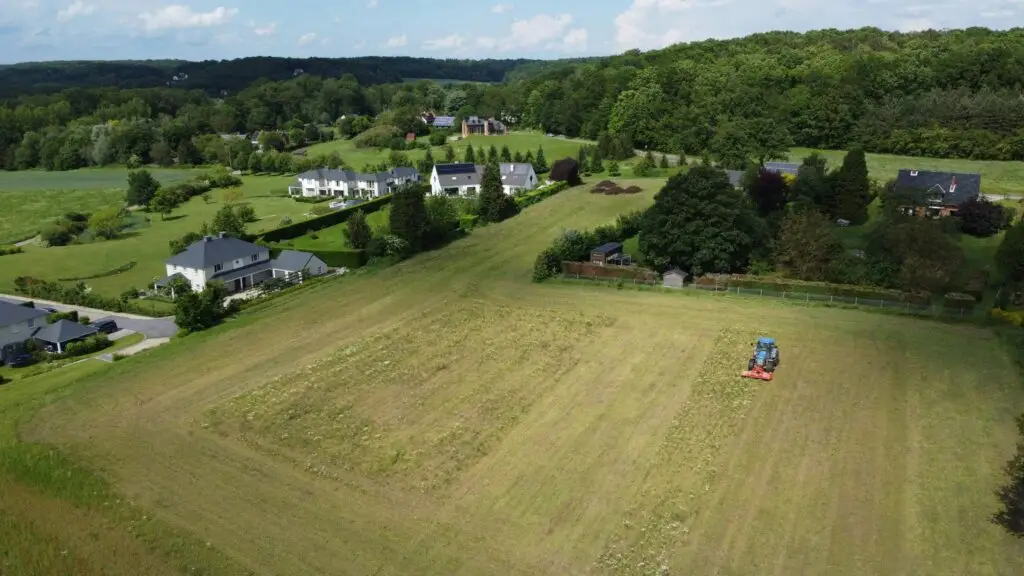
Open fields and fence lines on Southeast Michigan properties have a way of disappearing under a season or two of unchecked growth. Tall grass, thick weeds, briars, invasive phragmites, and light woody brush push in from the edges and, left alone, will reclaim cleared land faster than most landowners expect. Brush Grinders LLC provides professional brush mowing and brush hogging in Clinton Township and throughout Macomb County—cutting down dense overgrowth across fields, fence lines, and open terrain that a standard mower cannot touch. If you have open acreage between M-59 and the Chesterfield area, a fence line along a rural Macomb County road, or a field that’s gotten out of hand, give us a call at (586) 244-8729 for a free estimate.
What Brush Mowing Actually Involves
Brush mowing—also called brush hogging—uses heavy-duty rotary or flail mowing equipment mounted to a tractor or skid steer to cut and process dense, overgrown vegetation across open terrain. The equipment is built for material that a conventional lawn mower or zero-turn cannot handle: tall grass that has gone to seed, woody weeds, dense bramble patches, light saplings, and invasive ground cover that’s taken over otherwise open land. Unlike forestry mulching, which grinds material into fine mulch, brush mowing cuts and reduces vegetation in height and volume, leaving it laid down across the ground rather than fully processed. This makes brush mowing the right choice when the target area is primarily grassy, weedy, or lightly woody—think field edges, fence rows, drainage corridors, and overgrown open parcels. The result after brush mowing is a property that goes from a tangle of shoulder-high overgrowth and brambles to clean, manageable, accessible terrain. The cleared material breaks down naturally on-site, and the ground is immediately more usable for whatever purpose it serves.
Our Brush Mowing Process
Step 1 — Free Property AssessmentWe start with a free on-site visit to your Clinton Township or Southeast Michigan property. We assess the density and type of growth, identify any specific concerns (fence lines to avoid, drainage features, property boundaries), and give you a clear quote based on what we actually see. Open field mowing and heavily brushed fence line work are priced differently, and we make sure the estimate reflects reality.
Step 2 — Equipment Setup & AccessWe identify the best equipment access route and mowing sequence based on the property layout. For large open fields, we establish an efficient run pattern. For fence line work, we set our approach to stay tight to the fence without damaging posts or wire. Properties with varied terrain—part open field, part brushy margin—get a sequenced approach that handles each zone correctly.
Step 3 — Mowing OperationsOur heavy-duty brush mowing equipment moves through the target area, cutting all vegetation down to the specified height and processing the material. We work systematically across the property to ensure complete, even coverage with no skipped areas. Fence line runs are done with care to avoid contact with posts, wire, or other infrastructure.
Step 4 — Edge Detail & Final PassAreas that need additional attention—corners, around obstacles, or along defined boundaries—get a detail pass to ensure a clean, consistent result. We do not consider a job complete until the full area is cut to a uniform standard.
Step 5 — Open, Accessible PropertyYour field, fence line, or open parcel is clear and accessible when we leave. The cut material lies flat and begins breaking down naturally. Open areas that previously blocked sight lines, access, or use are now functional. For properties that benefit from periodic maintenance mowing, we can schedule follow-up visits to keep vegetation from re-establishing.
Serving Clinton Township and Macomb County
Our brush mowing crews serve Clinton Township and the surrounding communities of Macomb County—including Chesterfield Township, Harrison Township, Macomb Township, Shelby Township, and Sterling Heights. We also cover Oakland County, Lapeer County, and the broader Southeast Michigan region. Properties across this area face consistent brush and invasive species pressure: Michigan’s invasive species program actively manages aggressive spreaders like phragmites, autumn olive, and common buckthorn that take over open areas and fence lines when left unchecked. Regular brush mowing is one of the most practical ways to keep these species from re-establishing after initial clearing, and it preserves the open character of fields and transition zones that hunters, farmers, and landowners depend on.
From the open agricultural parcels off 19 Mile Road and Romeo Plank Road to the fence-lined properties in the Chesterfield and Macomb Township areas, this region has consistent demand for brush mowing services. We understand the terrain, the growth patterns, and the practical expectations of landowners who need overgrowth brought back under control efficiently and reliably.
Why Macomb County Landowners Choose Brush Grinders
Brush Grinders operates on a straightforward standard: honest estimates, clear communication, and work that delivers what was promised. Owners Jerry and Jackie Smith built this company around the idea that landowners deserve professional service without the guesswork. Every brush mowing project gets a free on-site estimate based on the actual conditions. Pricing reflects the real scope of work—not a formula applied without looking at the property.
We bring equipment appropriate to the job: heavy-duty rotary and flail mowers capable of handling the kind of dense, multi-stemmed overgrowth common on unmanaged Southeast Michigan properties. For properties that also have wooded sections requiring more aggressive clearing, we can combine brush mowing with our forestry mulching service to address both zones in a single project. That coordination saves time and reduces the overall cost compared to scheduling two separate contractors.
Brush Mowing FAQs
What is the difference between brush mowing and forestry mulching?
Brush mowing cuts and lays down vegetation, reducing height and volume without fully grinding the material. Forestry mulching grinds everything—including trees—into fine mulch in a single pass. Brush mowing is the better fit for open areas with grassy, weedy, or lightly woody growth. Forestry mulching is the right choice when there are established trees, dense shrubs, or significant woody growth that needs to be cleared entirely. Many properties benefit from both: forestry mulching for the wooded sections, brush mowing for the open zones.
How often does brush-mowed land need to be re-cut?
That depends on the vegetation type, season, and how much moisture the area gets. In Southeast Michigan, aggressive grasses and invasive plants like autumn olive can begin re-establishing within a single growing season if not managed. For properties that want to maintain open fields or transition zones long-term, an annual or twice-per-season maintenance mow is usually sufficient. We can discuss a realistic maintenance schedule based on your specific property during the estimate.
Can you mow close to fence lines without damaging them?
Yes. We operate carefully along fence lines and other structures. We identify any areas requiring extra care during the site visit and adjust our equipment setup and run pattern accordingly. Having any fence repairs completed before we arrive helps avoid complications.
Is brush mowing useful for hunting land management?
It is, particularly for managing field edges, transition zones between timber and open land, and areas you want to maintain as travel corridors or sight lines. Brush mowing is commonly combined with trail cutting on hunting properties to keep both access routes and open margins clear. If you want to talk through a broader land management approach for your hunting property, we’re glad to walk through it during the estimate.
Do you have a minimum acreage for brush mowing jobs?
We do not have a hard minimum. Brush mowing becomes more efficient the larger the open area, but we will evaluate any project and let you know if it makes practical sense. Describe the area when you reach out and we can advise.
Ready to reclaim your field or fence line? Call or text (586) 371-0946 or request a free estimate.