Michigan has more than 11 million acres of forest land, and a significant portion of that—including densely wooded parcels across Macomb, Lapeer, and St. Clair Counties—belongs to private landowners who want to actually use it. The problem is access. Without a defined trail network, navigating wooded terrain for hunting, recreation, or property management is slow, frustrating, and often impossible with any kind of equipment. Brush Grinders LLC cuts clean, defined trails through wooded and brushy terrain for property owners throughout Clinton Township and Southeast Michigan. Whether you need a single blind access path through a Macomb County woodlot or a connected trail system across a larger rural parcel, we have the equipment and the experience to make it happen. Call (586) 244-8729 for a free estimate.
What Trail Cutting Actually Involves
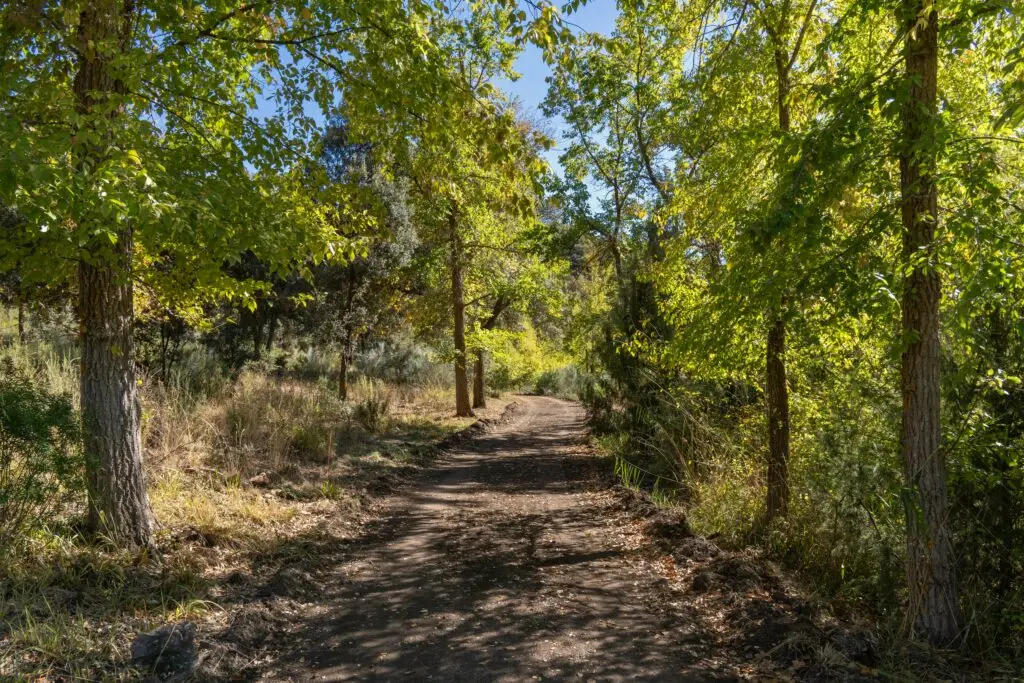
Trail cutting is the process of clearing a defined corridor through wooded or overgrown terrain to create a navigable path. Depending on the intended use, the corridor is cleared to a specified width—a foot path for hunting access typically runs six to eight feet wide, while an equipment maintenance trail or ATV route might need to be twelve feet or wider. Vegetation within the cleared zone, including brush, saplings, low-hanging limbs, and ground-level growth, is removed to create a clean, navigable path. Trail cutting on Southeast Michigan properties typically involves dense hardwood understory with a combination of species like buckthorn, honeysuckle, young maple, and ash—growth that establishes quickly in the forest floor and makes off-trail movement difficult. Our equipment handles this material efficiently, and the process leaves a defined, usable path with the surrounding timber largely intact. Before trail cutting, a wooded parcel may be effectively inaccessible except along the edges. Afterward, that same property has a functional trail network that lets you move through it for hunting, wildlife observation, habitat management, or equipment access—on your schedule, without fighting through brush every time.
Our Trail Cutting Process
Step 1 — Free Property Consultation & Estimate. We start with a conversation about what you want the trail system to accomplish—hunting blind access, recreational use, equipment routes, or some combination. Then we visit the property to assess the terrain, vegetation, and the most practical routing options. You receive a clear estimate before any commitment.
Step 2 — Route Planning. Based on your goals and what we see on the ground, we work with you to identify the best trail routes. We consider natural terrain features—ridgelines, clearings, water features, natural funnels for deer movement—and recommend layouts that serve the property most effectively. For hunting applications, we factor in wind direction, entry and exit points, and sight line positioning. You approve the final routing before we start.
Step 3 — Trail Clearing Operations. Our equipment moves along the approved trail routes, clearing vegetation to the specified width and height. Brush, saplings, and low growth within the trail corridor are removed completely. Larger trees that fall within the trail path are handled as part of the clearing process. We work at a pace that delivers clean, consistent corridor width throughout the trail length.
Step 4 — Edge Definition & Detail Work. Trail intersections, entry points, and areas requiring extra precision—tight corners, approaches to stands or blinds, transitions from wooded to open terrain—receive focused attention. A well-cut trail is consistent from end to end, not rough in the middle and precise only at the visible points. We hold that standard throughout.
Step 5 — Accessible, Usable Trail Network. The completed trail network is ready to use immediately. Depending on your goals, this might mean a single efficient path to a deer stand, a connected loop for recreational walking, or a complete system of access routes and maintenance corridors across a larger property. Your land, which may have been effectively inaccessible before, now has functional, defined routes you can actually count on.
Serving Clinton Township and Southeast Michigan
Brush Grinders provides trail cutting services throughout Clinton Township and the surrounding Macomb County communities—including Chesterfield Township, Harrison Township, Macomb Township, and Shelby Township—as well as properties across Oakland County, Lapeer County, and St. Clair County. Michigan has a strong hunting culture, and our trail cutting work reflects that: much of what we do is opening up access routes, blind corridors, and shooting lanes on private hunting land across the region. We also serve recreational landowners who simply want to enjoy their wooded property without fighting through vegetation every time they step onto it.
The Michigan DNR manages extensive public hunting land across the state, and private landowners in this region increasingly focus on habitat development to make their properties more productive. Trail networks are a foundational element of that—connecting food plots, water sources, staging areas, and stand locations in a way that supports both hunting success and general property management. Our trail cutting work is built around understanding those goals and executing precisely.
Why Clinton Township Landowners Choose Brush Grinders for Trail Cutting
Trail cutting is detail-oriented work. A trail that wanders, narrows inconsistently, or misses the intended target isn’t much better than no trail at all. Brush Grinders approaches every trail project with that precision in mind. Our commitment to straightforward, quality work applies to trail cutting the same way it applies to our larger clearing projects: we scope it carefully, execute precisely, and don’t call it done until the result matches what was planned.
Trail cutting is also commonly paired with other services for maximum property impact. Combining trail cutting with forestry mulching handles wooded properties where the primary clearing and the trail network can be developed simultaneously, reducing equipment mobilization cost. Adding brush mowing to the package keeps the open margins along trails clear through subsequent growing seasons. We can structure that as a single project or coordinate it in phases depending on your timeline and budget.
Trail Cutting FAQs
How wide are the trails you cut?
Trail width depends entirely on intended use. A foot path for hunting access is typically six to eight feet wide—enough to walk through cleanly and carry equipment without constantly brushing the edges. An ATV trail or equipment access route would be correspondingly wider, often twelve feet or more. We establish the target width with you during the planning phase and hold it consistently throughout the trail.
Can you cut trails through heavily wooded Michigan terrain?
Yes. Our equipment is built for dense hardwood understory that characterizes many Southeast Michigan wooded parcels. Areas with heavy buckthorn, honeysuckle, young maple, or other established brush are standard work for us. Heavily wooded trail corridors often benefit from pairing trail cutting with forestry mulching, which we can combine into a single project when warranted.
How do you determine where the trails go?
Trail routing is driven by your goals and informed by what we see on the property. We want to understand what the trail needs to accomplish—hunting access, recreational use, equipment movement—before we recommend routes. For hunting applications, we factor in stand positions, natural terrain features that concentrate deer movement, and entry/exit approaches that minimize disturbance. We walk the property with you when helpful, or work from your direction if you have a layout already in mind.
Do you maintain trails on an ongoing basis?
We do not currently offer scheduled maintenance contracts, but we do return for maintenance cuts as needed. Michigan brush and understory vegetation re-establish into cleared trail corridors over time—typically faster in the first growing season post-cut, then more slowly as the ground stabilizes. A maintenance cut every year or two keeps most trail networks in good condition. We are easy to reach and responsive when that time comes.
Can trail cutting be combined with hunting plot development?
Absolutely, and it often should be. Trail networks work best as part of a broader habitat plan that also includes food plots, staging areas, stand positions, and managed sight lines. Many of our hunting land customers combine trail cutting with land clearing and forestry mulching into a single project that transforms their property from overgrown and underperforming to a well-structured hunting and land management system. We can talk through the full scope during the estimate.
What is the best time of year to cut trails?
Late fall through early spring is often ideal for trail cutting in Southeast Michigan, particularly for hunting access routes. Cutting during the dormant season reduces disturbance to vegetation outside the trail corridor and lets the path establish before the next growing season. That said, trail cutting can be done year-round—summer cuts are practical for landowners who want trails ready for fall hunting. We schedule based on your timeline and will advise on any seasonal considerations for your specific property.
Ready to open up your property? Call or text Brush Grinders LLC at (586) 371-0946 or contact us for a free estimate.